

The Sanitation Capacity Constraint: A Risk-Based Operating Model for Food Production
When cleaning windows shrink, the challenge is not simply to work faster. It is to direct limited sanitation capacity toward the work carrying the greatest operational and food-safety risk.
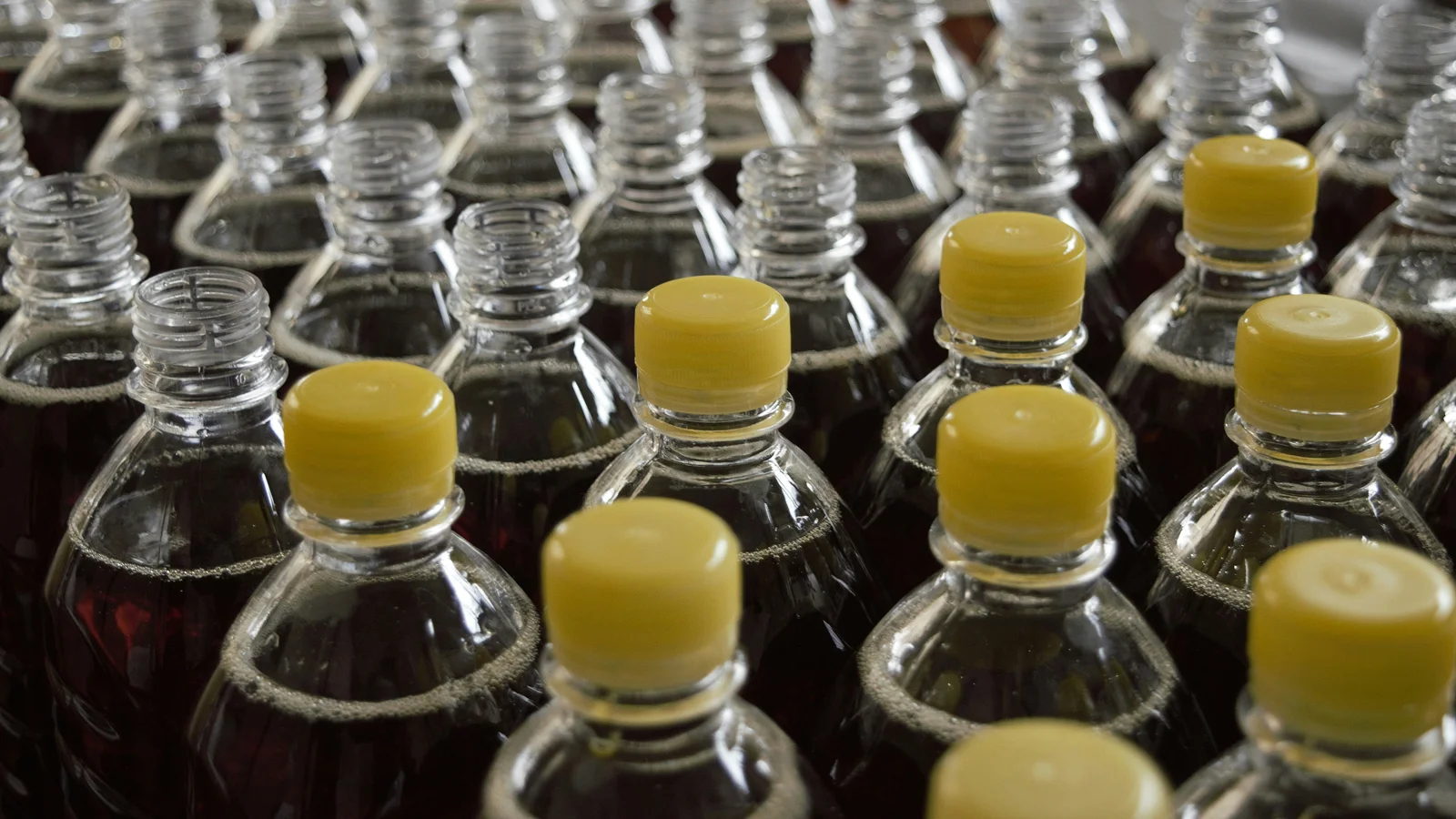
Sanitation capacity is ultimately an allocation decision. When production compresses the available cleaning window, risk—not convenience— should determine where limited labor is deployed first.
At a Glance
Sanitation capacity is finite. When production delays compress the cleaning window, completing every task as originally scheduled may no longer be operationally possible.
Risk should determine priority. Limited labor should first be directed toward activities carrying the greatest food-safety, operational and compliance consequences.
The management question changes. Rather than asking how to fit four hours of cleaning into three, leaders should decide where the next available labor hour produces the greatest reduction in meaningful risk.
Why food manufacturers should think about sanitation as a resource-allocation and risk-management problem—not simply a cleaning schedule
In food manufacturing, there is almost always more that could be cleaned than there is time available to clean it.
Production runs late. Equipment becomes available later than expected. Changeovers create additional work. Staffing fluctuates. An unusually difficult production run can consume sanitation capacity that had been allocated elsewhere.
The sanitation window, however, often has a much harder endpoint: the next production cycle.
This creates an operating challenge that is easy to misdiagnose.
When sanitation falls behind, the instinctive response is often tactical: add labor, authorize overtime, or ask the sanitation team to move faster.
Each may occasionally be necessary. But none addresses the more fundamental management question:
When sanitation capacity is constrained, where should the next available labor hour go?
That question reframes sanitation from a collection of cleaning tasks into a resource-allocation problem.
And in an environment governed by food-safety controls, GMPs, certification schemes such as SQF, internal quality systems, and potentially customer-specific requirements from retailers such as Costco, the consequences of that allocation extend well beyond appearance.
The objective should not be to clean everything equally.
It should be to deploy finite sanitation capacity against the activities that reduce the greatest amount of meaningful risk.
Sanitation has a capacity problem
Consider a production facility with a four-hour sanitation window.
The labor model, assignments, sequence of work, equipment access, chemical preparation, inspection process, and expected production restart have all effectively been designed around those four hours.
Then production runs 45 minutes late.
Nothing else changes.
The next production cycle is still expected to begin on time. Required sanitation controls remain required. Pre-operational activities still need to occur. But nearly one-fifth of the planned sanitation window has disappeared.
The conventional response frames this as an execution problem:
- How do we fit four hours of cleaning into three hours and fifteen minutes?
A stronger operating model asks a different set of questions:
- Which activities cannot move?
- Which activities can move without materially increasing risk?
- Where does the loss of capacity create an unacceptable condition?
And:
- Who makes that decision?
These questions matter because distributing a longer checklist does not create additional sanitation capacity.
If leadership has not established priorities in advance, frontline employees will eventually establish them themselves—often late in the shift, under time pressure, and with incomplete visibility into food-safety, quality, customer, and operational requirements.
The issue is therefore not whether prioritization happens.
Prioritization is inevitable. The question is whether it happens by design or by default.
Visible cleanliness is not the same as risk reduction
One challenge in sanitation management is that visibility can distort priority.
A large section of production floor covered with visible residue may command immediate attention. Meanwhile, a difficult-to-see product-contact component, an allergen-transfer point, or a surface awaiting pre-operational verification may represent substantially greater consequence.
Similarly, a machine exterior with visible streaks may appear more urgent than an improperly controlled sanitation tool. A cluttered support area may attract attention before a less-visible condition capable of affecting product integrity.
All may require correction.
But they do not necessarily carry the same risk.
That is why a mature sanitation system distinguishes between visible soil and operational consequence.
Federal CGMP requirements reflect this risk-oriented logic. FDA requirements call for food-contact surfaces to be cleaned as frequently as necessary to protect against allergen cross-contact and contamination, while non-food-contact equipment surfaces must also be cleaned at frequencies necessary to protect food from those risks.
The implication is important:
Priority and frequency should follow consequence—not simply appearance.
A four-part hierarchy for sanitation capacity
A useful starting point is to ask what each sanitation activity is ultimately protecting.
That produces four lenses.
1. Protect the Product
The highest-consequence activities are generally those connected most directly to product integrity.
Food-contact surfaces, product residue, contamination pathways, allergen cross-contact, and required sanitation controls belong at the center of the operating model.
These are not simply cleaning preferences.
Where they are incorporated into the facility’s food-safety plan, allergen controls, sanitation procedures, preventive controls, or required pre-operational conditions, they establish part of the minimum acceptable operating state.
FDA enforcement actions continue to illustrate the significance of cleaning frequency and effective sanitation where food-contact surfaces and allergen cross-contact are involved.
The first question should therefore be:
What could happen to the product if this work is delayed or inadequately performed?
2. Protect the Process
The second lens is operational continuity.
Sanitation conditions can affect production even where the immediate issue is not a direct food-contact hazard.
Residue can interfere with equipment. Poor equipment access can complicate sanitation and inspection. Pre-operational deficiencies can create recleaning and delay startup. Poor housekeeping around production assets can interfere with maintenance or changeover activities.
The relevant management question becomes:
If this condition is not addressed during this window, what happens to the next production cycle?
A relatively small sanitation task that protects production readiness may therefore create considerably more operational value than a larger task whose primary benefit is appearance.
3. Protect the People
Sanitation is also part of the workplace-safety environment.
Water, oils, powders, product residue, hoses, tools, packaging debris, and other conditions can create employee hazards independently of their food-safety implications.
A floor condition, for example, might have limited direct product consequence while carrying immediate slip risk.
This is why sanitation priorities should not be viewed as a rigid ladder where product risk automatically makes every other concern secondary.
Instead, the operating model must recognize that multiple forms of consequence can exist simultaneously.
The question becomes:
What happens to the people working in the facility if this condition remains?
4. Protect the Standard
Finally, there is the broader operating standard of the facility.
Machine exteriors, walls, corners, support areas, equipment legs, storage spaces, structural surfaces, and environmental cleaning all contribute to facility condition, GMP discipline, pest prevention, employee behavior, audit readiness, and customer confidence.
These areas matter.
But under a genuine capacity constraint, a lower-consequence aesthetic condition should not inadvertently consume capacity required for a higher-consequence control.
Lower priority does not mean unimportant.
It means the activity should be managed through an appropriate frequency and schedule instead of competing equally for every sanitation minute.
From risk hierarchy to resource allocation
The hierarchy tells us what matters.
It does not completely solve the allocation problem.
Two sanitation activities may both matter.
Three may all require attention.
Five may legitimately appear on tonight’s plan.
But remaining capacity may only allow some of them to occur immediately.
A useful principle comes from product-development economics.
Donald Reinertsen, author of The Principles of Product Development Flow, has long advanced the concept of Cost of Delay: the idea that delaying work carries an economic consequence and that this consequence can be quantified and incorporated into decision-making.
The significance for sanitation is not that a food plant should import a product-development formula literally.
It is the underlying management principle:
When a scarce resource is shared among competing activities, priority should consider not only the importance of the work, but the consequence of delaying it relative to the capacity it consumes.
Food-production sanitation presents a remarkably similar operating challenge.
- Sanitation capacity is finite.
- Multiple activities compete for that capacity.
- The consequences of delaying those activities vary.
- And the labor required to address each activity can vary substantially.
- That suggests an analogous framework.
A Sanitation Priority Index
An illustrative model might look like this:
Sanitation Priority = (Food-Safety Consequence + Time Criticality + Operational / Audit Impact) ÷ Labor Required
This is not intended to create mathematical precision where none exists.
A plant should not assign a “7” to allergen risk and assume an equation has replaced professional food-safety judgment.
The value is in the discipline of comparison.
The framework forces four questions.
Food-Safety Consequence
What is the consequence of delay?
Could the condition contribute to contamination, allergen cross-contact, product integrity problems, or failure of a required sanitation control?
As consequence rises, priority rises.
Time Criticality
How quickly does the consequence increase?
Does this activity have to occur before the next production run?
Can it move to tomorrow?
Can it move three days?
Would delaying it by 30 minutes materially change the risk?
Two tasks with comparable importance can have dramatically different time sensitivity.
Operational / Audit Impact
Could incomplete work prevent production startup?
Could it create a pre-operational failure?
Could it undermine an SSOP, GMP expectation, verification requirement, customer specification, or audit requirement?
This captures consequences that extend beyond direct product-contact risk.
Labor Required
Finally:
How much of the scarce sanitation window does the activity consume?
This is where the model becomes particularly useful.
A ten-minute activity that removes a substantial food-safety or operational risk may rationally precede a 45-minute detail-cleaning task that produces relatively little immediate risk reduction.
The important management concept becomes:
Risk reduction per unit of sanitation capacity.
The next 15 minutes may be worth more than the next 45
Consider a sanitation team with one hour remaining.
Three activities remain.
- A product-contact component requires approximately 15 minutes of additional cleaning before it will be ready for pre-operational inspection.
- A floor condition requires 20 minutes to correct and presents an immediate employee safety concern.
- A broad machine-exterior detail clean requires approximately 45 minutes and primarily contributes to general facility appearance and periodic detail standards.
All three activities have value.
But their risk-adjusted value per labor minute is not equal.
- The product-contact issue carries significant consequence and extreme time sensitivity.
- The floor condition carries an immediate workforce-safety consequence.
- The machine-detail activity still belongs in the sanitation program—but its timing may potentially be managed without displacing the other two.
- A traditional checklist sees:
Three unfinished tasks.
A risk-based operating model sees:
Three different consequences competing for 60 minutes of capacity.
That distinction changes the quality of the decision.
Compliance establishes the floor
There is an essential boundary around this framework.
Prioritization cannot become a mechanism for rationalizing the omission of mandatory food-safety controls.
If a sanitation activity is required by the plant’s food-safety plan, allergen controls, preventive controls, SSOPs, customer specification, regulatory obligation, or defined pre-operational standard, another activity receiving a higher theoretical score does not make that requirement disappear.
The relationship should instead be understood this way:
Compliance establishes the floor. Prioritization determines how capacity should be allocated within and above that floor.
This distinction becomes particularly important in audit-driven environments.
SQF’s food-manufacturing requirements address defined cleaning responsibilities and methods, sanitation effectiveness, verification, pre-operational hygiene inspections, and records of cleaning, sanitation, and verification activities. Current SQF materials explicitly require the responsibility, frequency, and methods used to verify cleaning effectiveness to be documented and implemented, with records maintained.
The sanitation operating system therefore needs to answer considerably more than:
- Was this surface cleaned?
It increasingly needs to answer:
- Was the appropriate activity performed?
- At the appropriate frequency?
- Using the defined method?
- Was the result verified where required?
- Was a deficiency corrected?
- Can the organization demonstrate that the control occurred?
That is a substantially different management standard.
Audit readiness changes what “complete” means
A food-production facility can look clean while still having weaknesses in its sanitation control environment.
That distinction is fundamental.
Visual cleanliness provides information.
It does not, by itself, demonstrate that required sanitation controls were executed effectively.
A mature sanitation program may need to account for cleaning responsibilities, frequencies, methods, chemical control, pre-operational inspection, verification, corrective action, and documentation depending on the facility and applicable standard. SQF’s manufacturing framework expressly connects cleaning and sanitation with verification and recordkeeping rather than treating sanitation purely as an appearance condition.
For facilities serving major customers, there may be another layer.
A manufacturer supplying Costco, for example, may have to manage customer-specific requirements in addition to its regulatory obligations, internal food-safety system, and third-party certification program. The specific requirements should come from the applicable Costco supplier or customer program rather than be assumed from SQF certification alone.
This creates an important operating implication:
The sanitation schedule should be an expression of the plant’s control architecture—not an independent cleaning document.
The food-safety plan says what risks must be controlled.
The applicable standards establish requirements.
Customer programs may create additional expectations.
The sanitation operating model translates those obligations into labor, sequencing, frequency, verification, and accountability.
Frequency is as important as priority
The sanitation capacity problem cannot be solved only by determining what gets done first.
Plants must also determine how frequently each activity actually needs to occur.
Without that discipline, sanitation programs often drift toward one of two extremes.
Everything becomes nightly
The checklist grows.
The available sanitation window does not.
Eventually, employees rush, overtime increases, or crews establish an unofficial system for deciding what “really” needs to happen.
Or periodic work never happens
Critical nightly tasks continually consume the available window, while lower-frequency detail work is pushed to tomorrow.
Then next week.
Then next month.
Neither is particularly mature.
A stronger operating model separates priority from frequency.
A high-consequence task may require execution during every sanitation cycle.
Another high-consequence activity may appropriately operate on a validated periodic frequency.
A lower-product-risk activity might still require frequent attention because it creates a rapidly developing employee-safety or operational condition.
Another task may appropriately fall into weekly or rotational detail cleaning.
The FDA’s CGMP language itself centers cleaning frequency on what is necessary to protect against contamination and allergen cross-contact, reinforcing the importance of determining frequency based on the risk being controlled.
The objective is not to clean less.
It is to stop using “every night” as a substitute for a deliberate sanitation strategy.
The compressed sanitation window is the real stress test
Sanitation systems look strongest when everything goes according to plan.
Their actual design becomes visible when the plan breaks.
Return to the four-hour sanitation window.
Suppose it becomes three.
A weak system generally produces some combination of four responses:
Employees move faster.
Employees stay later.
Supervisors informally remove tasks.
Or work quietly remains incomplete.
A stronger system behaves differently.
It knows what cannot move.
It knows which tasks possess frequency flexibility.
It knows what conditions cannot be accepted prior to production.
It identifies and controls deferred work rather than allowing it to disappear.
And when available capacity is genuinely insufficient to satisfy the required control environment, it escalates that fact to management.
This distinction matters:
The objective is not to normalize incomplete sanitation. It is to eliminate unstructured incompleteness.
A compressed window should trigger a predefined operating response—not an improvised reduction in standards.
“Work faster” is not a capacity strategy
None of this means productivity is irrelevant.
Quite the opposite.
- Improved work sequencing can increase throughput.
- Better chemical staging can reduce wasted movement.
- Appropriate tools can reduce task duration.
- Better equipment accessibility can improve cleanability.
- Clearer work instructions can reduce rework.
- Training can improve both speed and consistency.
Those are structural productivity improvements.
They should be pursued.
But productivity has limits.
At some point, asking a sanitation employee to perform four hours of controlled activity in three hours no longer represents process improvement.
It represents a transfer of schedule risk from the production system to the sanitation technician.
That risk may appear elsewhere:
- Missed surfaces.
- Reduced detail.
- Incomplete documentation.
- Inadequate verification.
- Incorrect tool movement.
- Insufficient chemical process execution.
- Or a tendency to attack the most visually obvious conditions while less-visible but higher-consequence conditions remain.
The operating model therefore needs to distinguish between two fundamentally different problems:
Waste that can be engineered out of the process.
And:
Capacity that genuinely does not exist.
The former should be improved.
The latter should be visible.
From sanitation checklist to sanitation operating system
Checklists remain extremely useful.
But a checklist primarily answers one question:
What should be done?
A sanitation operating system answers several additional questions:
- What is mandatory?
- What gets done first?
- What frequency applies?
- What does acceptable completion look like?
- What requires verification?
- What needs to be documented?
- Who can reprioritize work?
- What happens to deferred work?
- What constitutes an unacceptable capacity shortfall?
- Who must be notified?
- And what needs to happen before production can resume?
This is the difference between managing tasks and managing a system.
It also allows sanitation performance to produce useful management information.
Repeated overtime may indicate that sanitation demand exceeds designed capacity.
Repeated pre-operational failures in the same location may indicate a training, equipment-accessibility, method, or standard-work problem.
Persistent deferral of periodic cleaning may indicate that the frequency model is unrealistic.
A machine that consumes disproportionate sanitation hours may present an opportunity for different tools, maintenance intervention, hygienic-design improvement, or revised work sequencing.
Production delays that consistently generate sanitation overtime may reveal an upstream scheduling problem rather than a sanitation productivity problem.
Once sanitation is treated as an operating system, these conditions stop appearing as isolated cleaning problems.
They become signals about system performance.
Measure risk reduction—not simply hours worked
Sanitation organizations understandably measure completion.
- Hours worked.
- Tasks completed.
- Checklist compliance.
- Inspection results.
- Rework.
All can be useful.
But the capacity perspective introduces another management question:
How effectively are we converting sanitation labor into risk reduction?
That changes the conversation.
Instead of asking only whether overtime increased, leadership asks why sanitation demand exceeded available capacity.
Instead of only measuring checklist completion, supervisors ask whether the highest-consequence controls were reliably executed.
Instead of treating late production and sanitation overtime as separate events, management examines the relationship between them.
Instead of repeatedly rolling unfinished periodic tasks forward, leaders determine whether the underlying frequency or labor model needs redesign.
This does not necessarily require a sophisticated mathematical dashboard.
The more important step is adopting the operating logic behind one.
A useful sanitation dashboard might eventually track measures such as:
- protected or critical tasks completed before release;
- pre-operational rework;
- recurring sanitation exceptions;
- scheduled versus actual sanitation-window duration;
- deferred work aging;
- sanitation labor by risk category;
- recurring equipment or areas consuming disproportionate capacity; and
- capacity loss attributable to production delays.
The purpose is not measurement for measurement’s sake.
It is visibility into where sanitation capacity is going and what risk reduction it is buying.
The management opportunity: design sanitation capacity instead of discovering it nightly
Food-production sanitation sits at the intersection of multiple operating priorities.
- Food safety.
- Allergen control.
- Production uptime.
- Employee safety.
- GMP performance.
- Customer requirements.
- Audit readiness.
- Facility condition.
- Labor productivity.
Each competes, in some fashion, for the same finite sanitation capacity.
That is why sanitation should not be managed as an undifferentiated collection of cleaning activities.
The stronger model begins with the required control environment.
It then establishes a risk hierarchy.
It defines appropriate frequencies.
It distinguishes mandatory from movable work.
It builds verification and exception management into execution.
And finally, when multiple legitimate activities compete for scarce remaining capacity, it uses consequence of delay relative to capacity consumed to inform sequence.
This is where the concept borrowed from product-development economics becomes particularly useful.
Reinertsen’s Cost of Delay thinking asks managers to recognize that waiting itself has a consequence.
Applied to sanitation, the insight becomes:
The value of the next labor hour depends not merely on what can be cleaned during that hour—but on what risk grows if that work waits.
That is a fundamentally different way to think about sanitation productivity.
The largest task is not automatically the most important.
The dirtiest-looking task is not automatically the most important.
The task that has been waiting longest is not automatically the most important.
And the task that can produce the greatest number of completed checklist items is not automatically the most important.
The better question is:
Which use of our remaining sanitation capacity protects the greatest amount of consequential risk?
That leads plant leadership back to four questions:
- Did we protect the product?
- Did we protect the process?
- Did we protect the people?
- Did we protect the standard?
And ultimately:
Did we deploy the sanitation capacity available to us against the highest-consequence risks first?
When those decisions are designed into the operating model—rather than left to individual judgment at the end of a compressed shift—sanitation becomes more than a cleaning function. It becomes a managed component of operational risk.
About the Author
Delbert Kim
Chief Operating Officer, Getty Team
Delbert Kim focuses on facility operations, service delivery and the operating systems that help organizations improve consistency, quality and risk control across complex environments.
Build sanitation around the realities of your operation.
Getty Team develops cleaning and sanitation programs around production schedules, facility requirements and the operational risks that matter most—helping teams protect the process without losing sight of execution.